The biomedical scientist: What we can learn from a drop of blood
There are not many medical diagnoses that do not require a blood test. Do you want to be part of our superhero team?
Eirik Dankel
Published 3/6/2026
There are not many medical diagnoses that do not require a blood test. Do you want to be part of our superhero team?
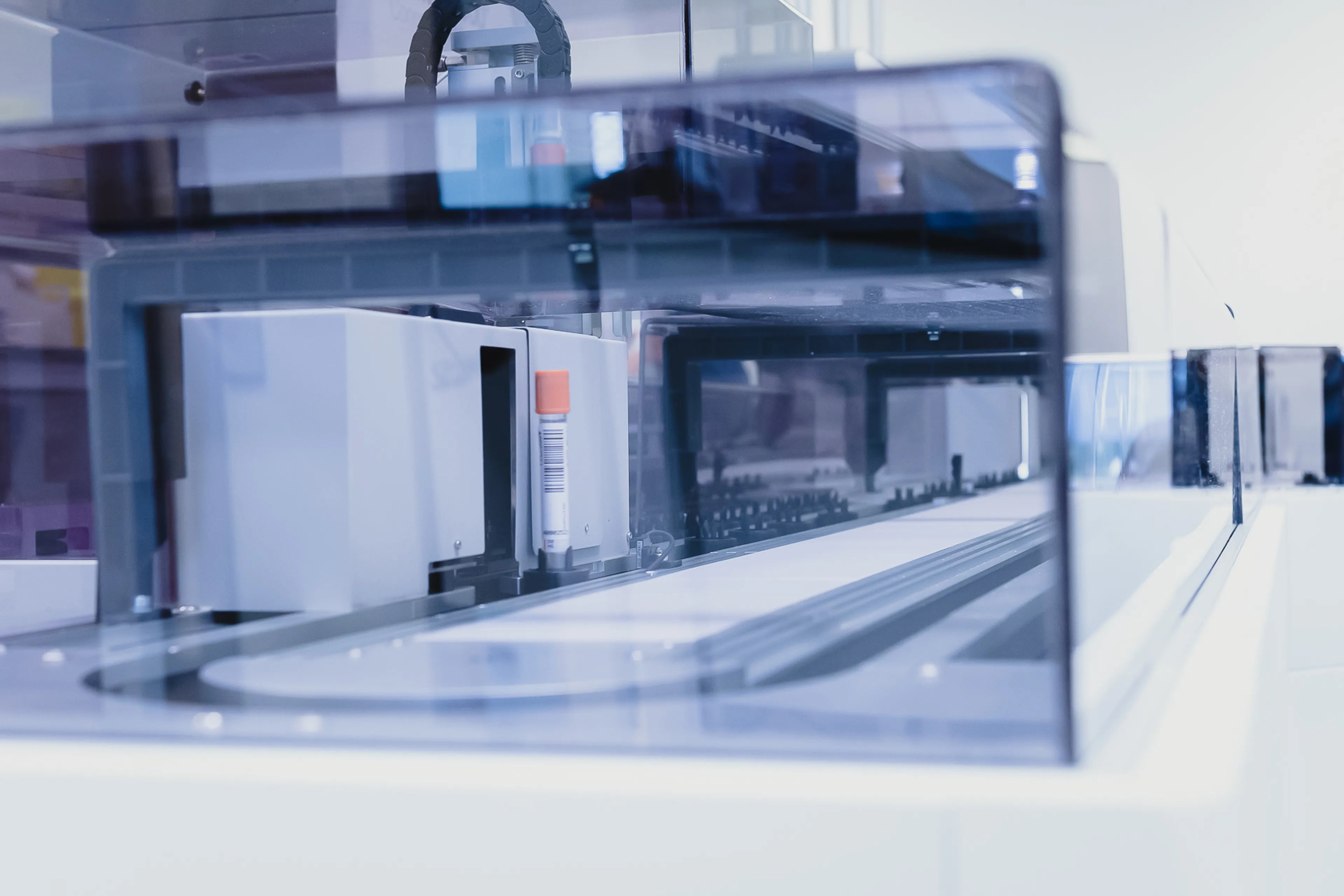
The setting looks futuristic on the top two levels of what we call the south-west block of Haugesund Hospital.
After our patients have been poked in the arm and blood samples have been collected, the samples are literally sent on a conveyor belt and carried between machines that precisely measure their content. The drops of blood carry vital information.
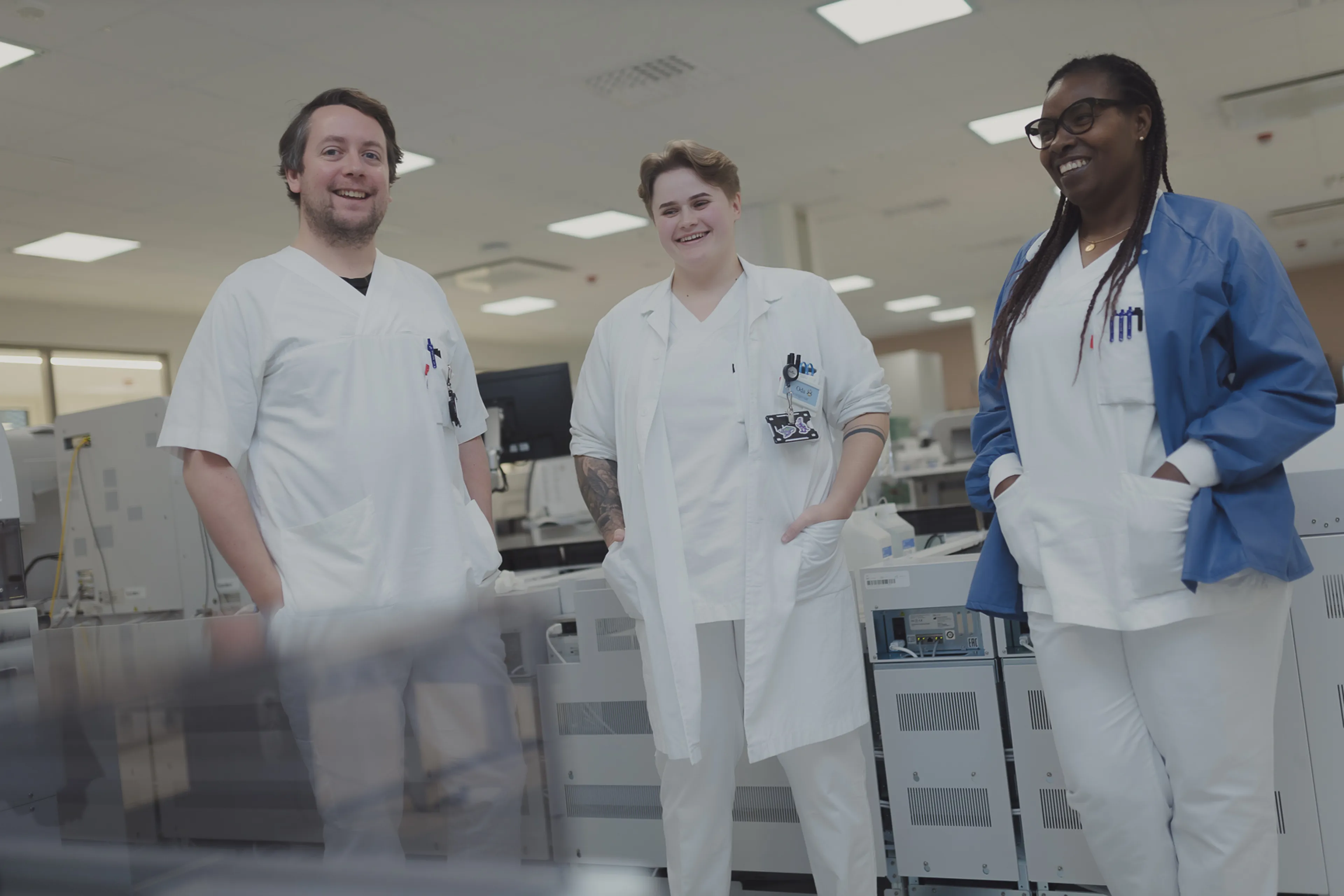
Here, Oda, Placidia and Trond have full authority. They are biomedical scientists working in the field of medical biochemistry.
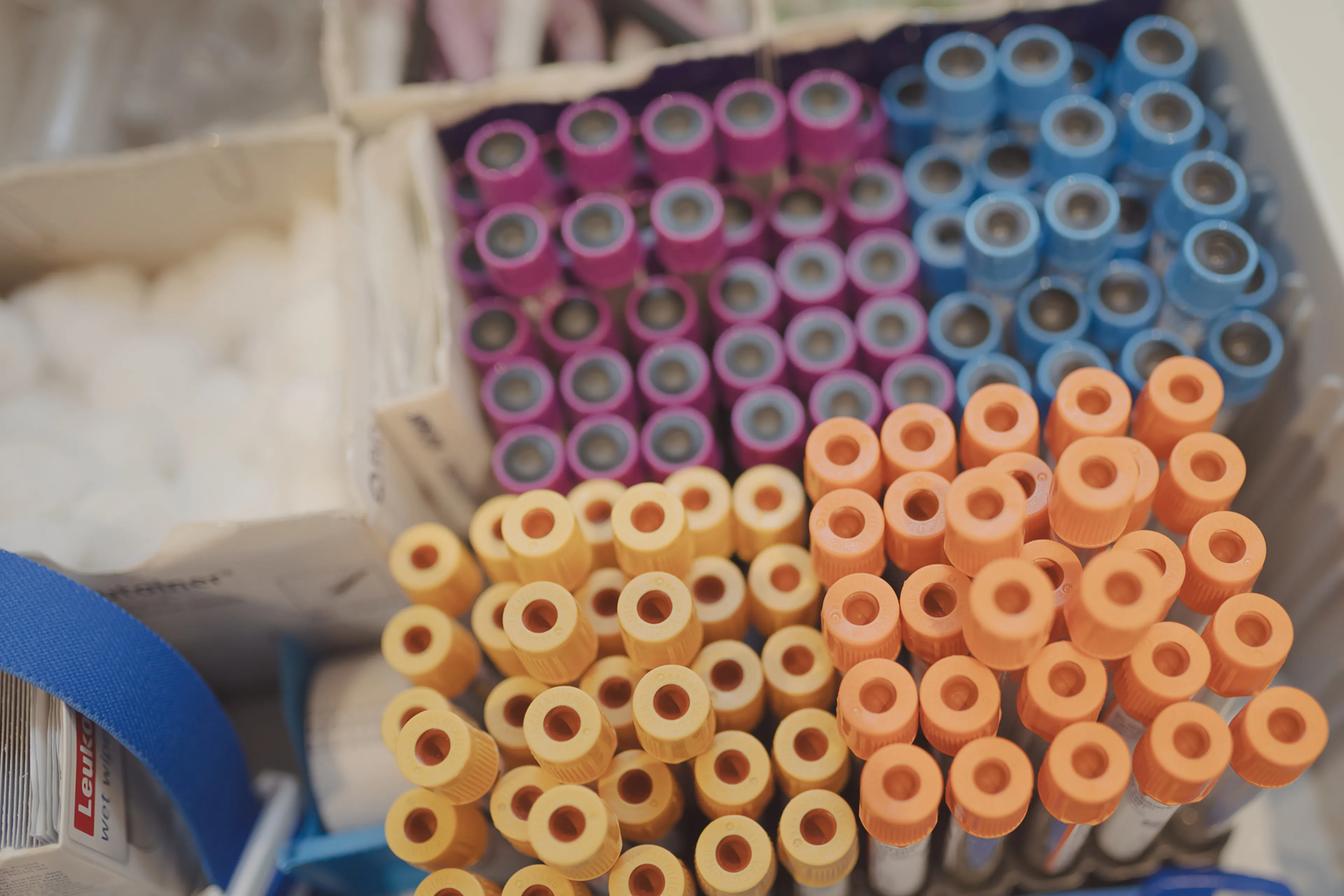
"It's fascinating what you can discover from just a drop of blood. A few millilitres of blood can tell us a great deal about your health. From a single drop, we can detect cancer," says Trond Staveland.
The biomedical scientist profession combines technology and biology. You work with people and machines. They are a vital resource at the hospitals.
"I feel like my job is important."
There seems to be no end to the ongoing technological development. Much of today's analysis work is now automated. The microscope and manual routines are used less than before, yet biomedical scientists are still responsible for sample collection, quality assurance, and verifying results.
Above all, technological advancements continue to benefit patients.
"We're seeing that genetic testing are becoming more and more common," Stavland points out.
"Especially in connection with personalised cancer treatments, where we carry out our analyses at a genetic level."
This is truly an exciting time to be a biomedical scientist.
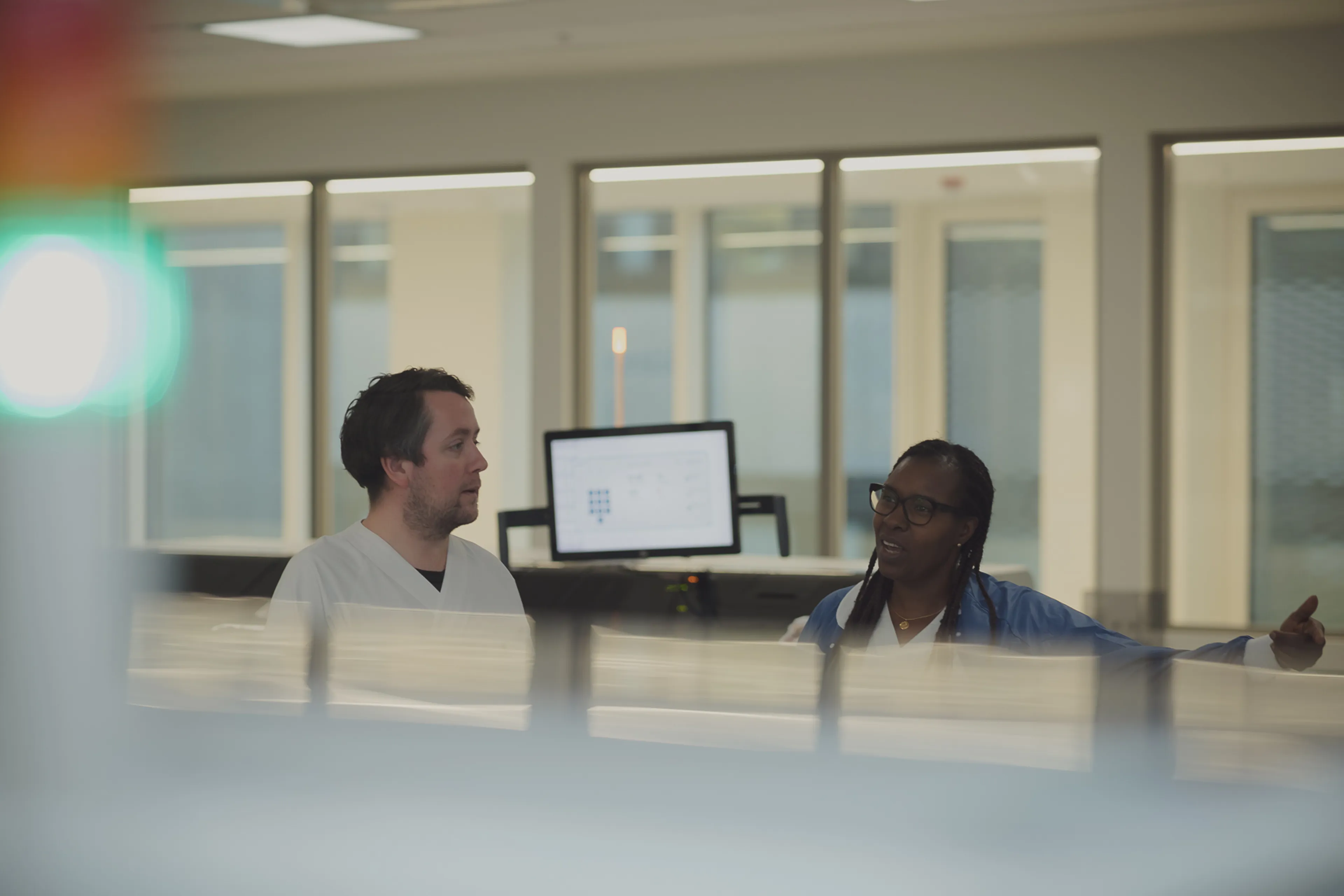
Fun. That's the word they use to describe what it's like to work as a biomedical scientist at Helse Fonna.
"I enjoy working with people combined with science subjects," says Placidia Nyiraneza.
She has worked here for 16 years. In her view, working at a hospital has its advantages:
"We get to do a bit of everything here."
Oda Erland is the newest member of the team. She's been here for two years – two years with variety, she adds:
"We work in rotations og get to develop a wide range of competencies. We switch tasks nearly every day."
That's also how they have become such a closely connected team.
"Our team is close-knit, but we also have a close relationship with the other teams we collaborate with," says Nyiraneza.
To say that they work with quite a few departments would be an understatement. Many of their tasks come from General Practitioners – not to mention the many other departments and professional groups across our hospitals.
They are also close neighbours with the blood bank and the microbiology laboratory.
"Good communication is key. If I find anomolies in test results, I get in touch with the department that requested them and ask them to investigate further."
If you're a biomedical scientist, you're in high demand. You probably know why that is. If you're wondering whether this is the right path for you, Erland challenges you to go for it, take the chance – it's worth the effort.
"I really enjoyed sciences and maths. I was also interested in the human body, but didn't know what to expect," she says.
Luckily, it became a passion. But there is one thing she enjoys most of all:
"Working with trauma is exciting – especially the insight into a patient's condition I can get from a blood sample."
The trauma team is not for the faint-hearted, Stavland points out.
"When you're on-call for the tauma team, you have to take samples for the intensive care unit after accidents."
He lists some personal characteristics that are important for biomedical scientists:
"You have to be able to handle stressfull situations – that's essential. You also need to be very precise, able to juggle many things simultaneously, prioritise, and assess what is most urgent."
If you prefer, you can work in rotations. That allows you to move between different programs. Stavland lists the ones that come to mind:
"Hematology, clinical chemistry, allergy, sample distribution, outpatient clinic, pre-analytics, trauma."
In short, there are many programs to choose from. If trauma isn't for you, you can choose a different path. It's entirely up to you.
"It's also our job to operate and maintain the different analysis machines."
This truly highlights the contrast in tasks throughout the varied working day of a biomedical scientist.
At Helse Fonna we can provide a unique opportunity for internships. We also have stipends for biomedical science students, giving financial support in exchange for work during shifts during the academic year.
Please get in touch with us for more information: