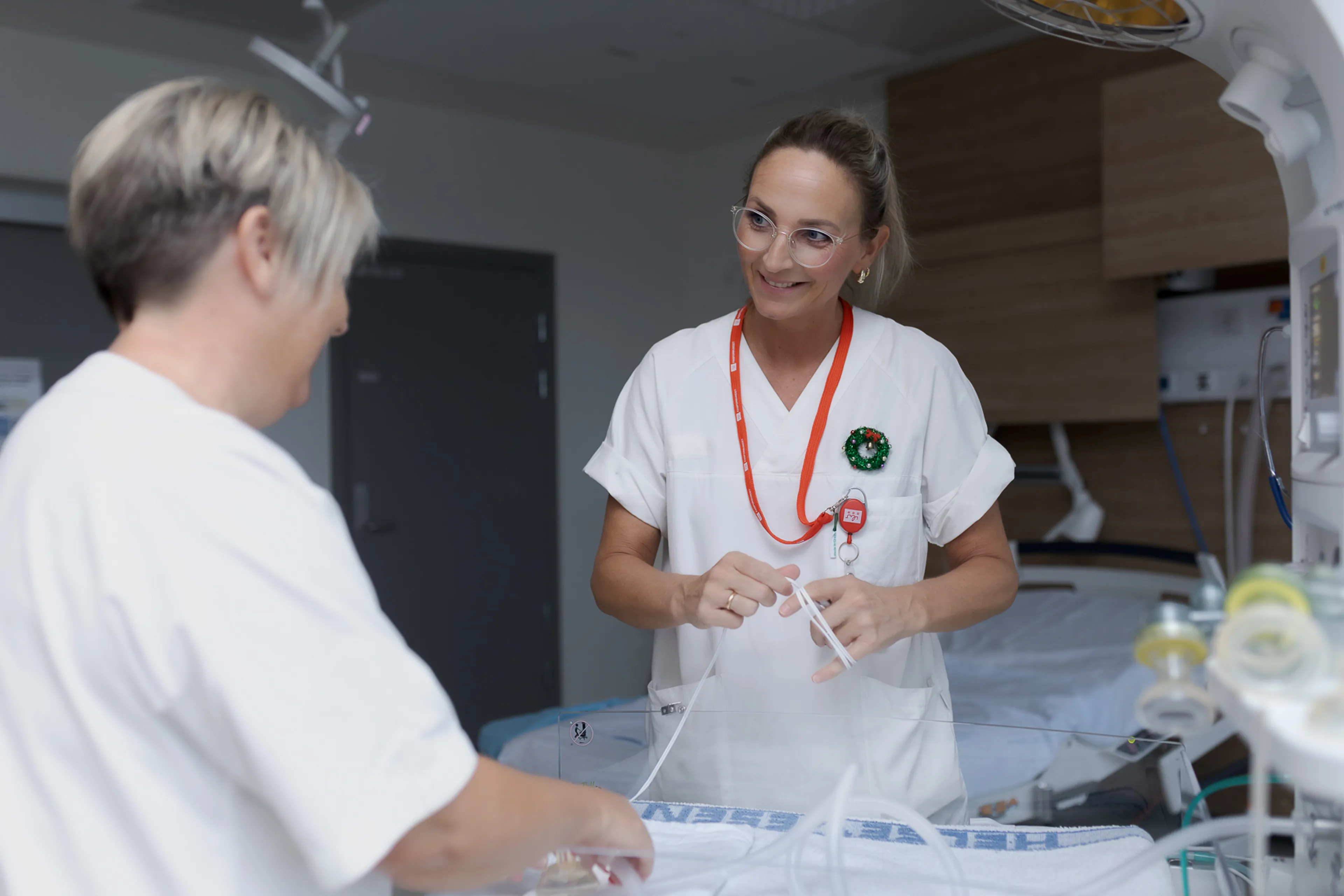
Meet our midwives
The midwife's work centres on those at the very start of life.
Eirik Dankel
Published 3/6/2026
The midwife's work centres on those at the very start of life.
For some families, Ingrid Aase Cabrera, Tove Austreim Jacobsen and Ellen Tangerås Hagen were there with them when a new family member entered the world.
On any given day, they may once again be there for someone when another child is born.
"I want to do a good job, and what I do means a great deal to the women giving birth", says Ellen Tangerås Hagen.
For her, there was never any doubt:
My dream was to become a midwife. A good start is important – both for the babies just beginning their lives and for their parents. We are an important part of the healthcare system.
A single day can quickly bring the highest highs and sometimes the lowest lows.
"I experience so much joy, I can feel emotional, and I know sadness. But whatever the day brings, everyone should feel supported by their midwife. Everyone should be seen and heard."
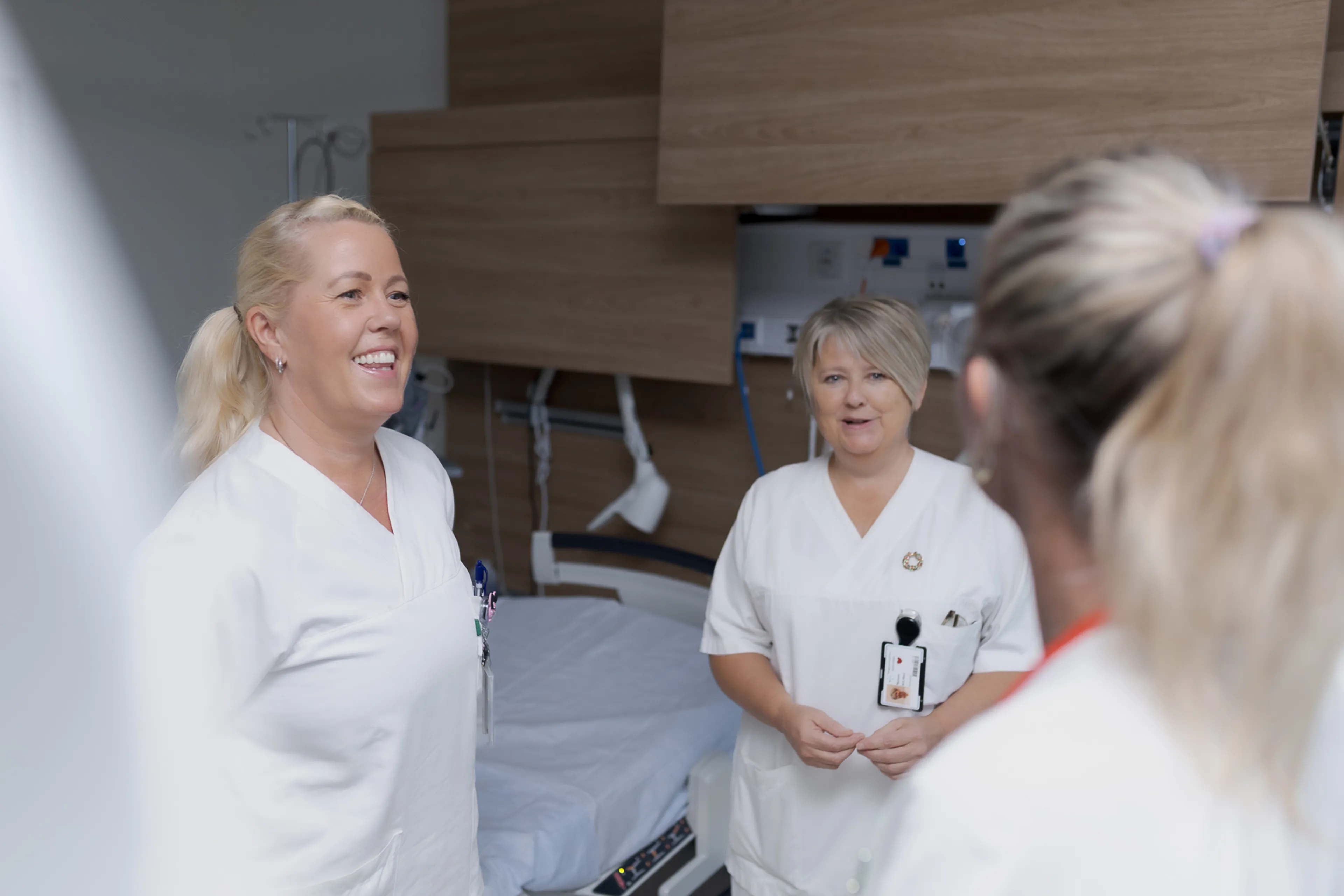
If you choose to become a midwife, you should know that the workdays are more than the delivery room.
Tove Austrheim Jacobsen points to the outpatient clinic and the postnatal period, among other things. Personally and professionally, she thrives on working with acute situations.
"It may seem daunting, but you're surrounded by skilled and experienced professionals. As a student, you receive thorough training. There is plenty of room to learn when you're new. New faces are always welcome".
Working at a hospital is varied, but also multidisciplinary. This is also the true for the maternity ward. Doctors, nurses, nursery nurses and assistants are all part of the team.
"Personally, I became a nurse for the sole purpose of becoming a midwife," says Jacobsen.
Often, hospital work revolves around illness at various stages of life.
"As a midwife, I work with young, healthy women who need a midwife by their side – and I'm responsible for one active birth at a time."
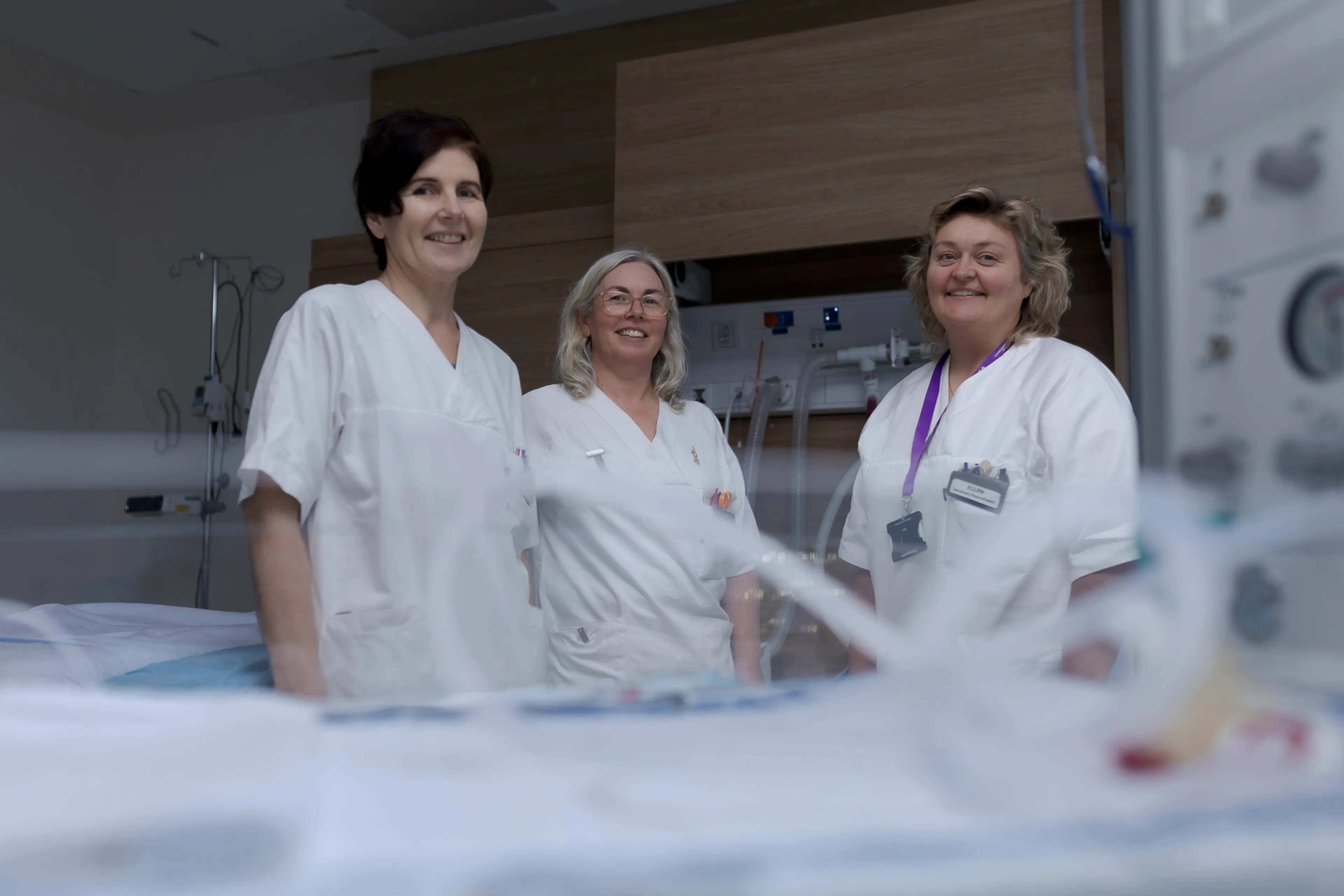
Ingrid Aase Cabrera didn't want to be a midwife.
"I worked in surgery. I tried intensive care. Then I changed my mind. I have no regrets."
Today, she spends one week on the maternity ward and the next week on the postnatal unit. No two days are the same.
"All three of us have worked here for many years, yet the work is still exciting. Every birth is different. We have a good working enviroment where we can ask questions about anything. It feels safe," Ingrid says.